Medical support materials deserve more than a clean shelf and a closed door. Their condition can affect patient care, staff safety, and daily clinical reliability. Yet storage is often treated as a background task. That assumption is risky. What is the best way to store medical support materials? The answer depends on material type, manufacturer instructions, facility risks, and actual working conditions. Learning how to store and maintain medical support materials requires practical discipline, clear records, and regular review.
In many healthcare settings, effective storage begins with a mapped, restricted area. Separate sterile packs, dressings, diagnostic accessories, and cleaning supplies by function and contamination risk. Keep cartons off the floor and away from sinks, windows, and direct sunlight. Use readable labels with batch details, expiry dates, and opening dates where applicable. Monitor temperature and humidity when product instructions require it. Rotate stock carefully, but never use damaged, wet, opened, or expired items.
Manufacturer instructions, facility procedures, and recognized quality guidance should shape every storage decision. Staff should inspect packaging seals, dust, moisture, pests, and physical damage during routine checks. A simple inspection log can reveal repeated problems, such as overloaded shelves or blocked ventilation. Training matters.
Still, no storage system is perfect. A busy clinic may miss a short inspection or misplace one delivery. That weakness deserves honest review, not blame. Regular audits, corrective actions, and staff feedback can make the process safer and more dependable. The goal is not merely an orderly room. It is preserving material integrity until the moment qualified healthcare professionals need it.
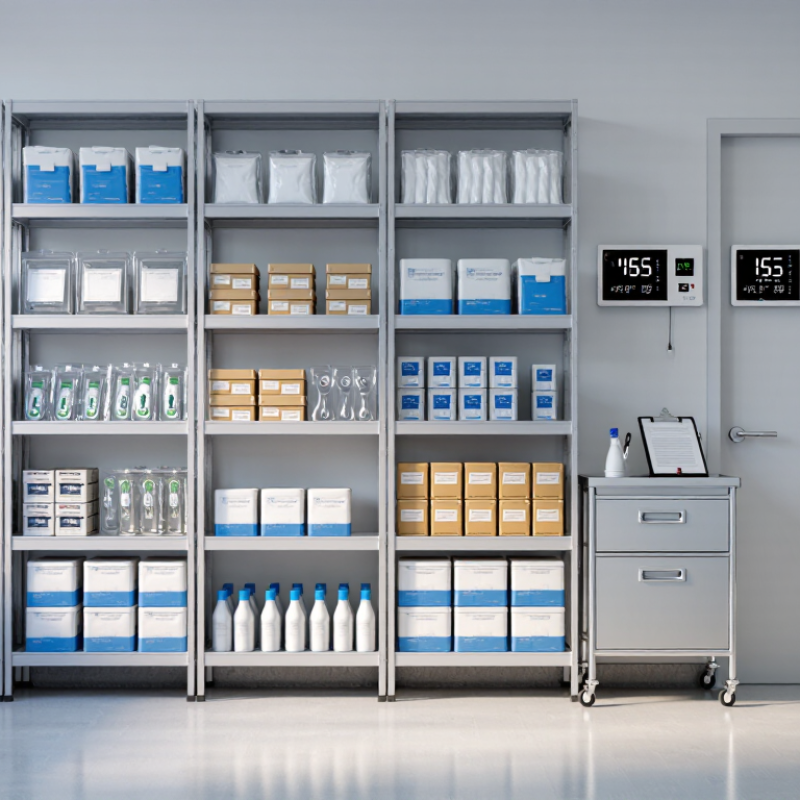
Medical support materials include wound dressings, sterile instruments, gloves, masks, diagnostic kits, and mobility aids. Each category needs a different storage approach. Sterile dressings should remain sealed in a clean, dry cabinet. Keep them away from sinks, dust, sunlight, and damaged packaging. Temperature-sensitive diagnostic materials may require refrigerated storage, while others must stay at controlled room temperature. Product labels and manufacturer instructions should guide every decision. A thermometer helps staff detect unsafe fluctuations. Do not place supplies directly on the floor. Use raised, washable shelving instead. Some materials look durable but degrade quietly. Plastic can become brittle. Adhesive can lose strength.
Reusable support items, such as braces or transfer equipment, need cleaning, drying, and inspection before storage. Store them where staff can reach them without climbing or moving heavy boxes. Keep sharp or fragile items in protected containers. Separate clean stock from returned, opened, or questionable materials. Record lot numbers, expiry dates, and temperature checks. Use older approved stock first, but never use anything past its expiry date or with broken seals. In practice, a simple daily check catches many problems. Still, no storage plan is perfect. Staff may forget one check during a busy shift. That weakness deserves attention, not blame. Training should include a real shelf walk, not only written instructions. Review the arrangement after incidents, seasonal humidity changes, or new equipment arrives.
| Material Category | Typical Examples | Recommended Temperature | Humidity, Light and Environmental Conditions | Packaging and Handling Requirements | Inventory and Safety Controls |
|---|---|---|---|---|---|
| Personal Protective Equipment (PPE) | Disposable gloves, surgical masks, respirators, protective gowns, face shields and shoe covers | Cool, dry room temperature Generally 15–30°C unless the product label specifies otherwise |
Protect from direct sunlight, excessive heat, moisture, dust and chemical vapors. Keep away from areas that may become wet. | Keep in the original sealed packaging until use. Do not compress, bend or place heavy items on masks, gowns or face shields. | Store off the floor and away from walls. Use first-expiring, first-out rotation and inspect packaging for tears, moisture or deformation. |
| Sterile Dressings and Procedure Packs | Gauze, wound dressings, drapes, suture kits and sterile instrument packs | Controlled room temperature Follow the labeled storage range |
Keep in a clean, dry, well-ventilated area protected from sunlight, condensation, insects and dust. | Do not use items with wet, torn, punctured or opened sterile packaging. Store in closed cabinets or covered shelving. | Maintain lot and expiry-date traceability. Avoid storing sterile packs directly under water pipes, sprinklers or ventilation outlets. |
| Syringes, Needles and Catheters | Single-use syringes, injection needles, IV catheters and related accessories | Room temperature Use the manufacturer’s labeled range |
Keep dry and protected from excessive heat, sunlight, dust and chemical contamination. | Keep in original packaging. Do not use if the sterile barrier is damaged. Store needles and sharp devices so they cannot fall or become accessible to unauthorized personnel. | Separate sterile products from used or contaminated devices. Place used sharps immediately into approved puncture-resistant sharps containers. |
| Antiseptics and Disinfectants | Alcohol-based preparations, chlorine-releasing products, skin antiseptics and surface disinfectants | Product-label range Many are stored at controlled room temperature |
Keep tightly closed in a cool, well-ventilated area. Protect light-sensitive products from light. Keep flammable alcohol products away from ignition sources. | Store in the original labeled container. Never transfer chemicals to unmarked containers. Keep incompatible chemicals separated and prevent leaks. | Use chemical-resistant secondary containment where leakage is possible. Maintain safety data sheets and check expiry dates and container integrity. |
| Vaccines and Other Cold-Chain Supplies | Vaccines, temperature-sensitive biological products and selected diagnostic reagents | Usually 2–8°C Some products require freezing or controlled room temperature; the product label prevails |
Monitor and record temperature continuously or at defined intervals. Protect light-sensitive products. Do not store in a refrigerator door or next to the cooling element unless specifically designed for it. | Use a qualified medical refrigerator. Keep products in original packaging and avoid freezing products labeled “do not freeze.” Do not use products exposed to temperatures outside the approved range until assessed. | Use calibrated temperature-monitoring devices, alarm procedures, and a documented excursion-response plan. Maintain a backup power or contingency arrangement. |
| Diagnostic Test Kits and Laboratory Consumables | Rapid test kits, specimen containers, pipette tips, slides and collection swabs | Label-specific Often room temperature or 2–8°C depending on the kit |
Protect from humidity, dust, direct light and temperature fluctuations. Some reagents require refrigeration and must not be frozen. | Keep components together in the original kit packaging. Do not use kits with damaged seals, missing components or exceeded stability dates. | Record lot numbers and expiry dates. Apply first-expiring, first-out rotation and document refrigerator temperatures when required. |
| Medical Oxygen Cylinders | Compressed oxygen cylinders and cylinder accessories | Cool, dry ambient area Avoid excessive heat |
Store in a clean, dry, well-ventilated location away from flames, smoking, oils, grease and combustible materials. | Secure cylinders upright with chains or approved restraints. Keep valve protection caps fitted when cylinders are not connected for use. Separate full and empty cylinders. | Use clear status labels and controlled access. Do not store cylinders in escape routes, unventilated cupboards or areas exposed to vehicle impact. |
| Enteral Feeding and Nutrition Supplies | Feeding bags, administration sets, enteral syringes and unopened nutritional products | Product-label range Unopened products are commonly stored at room temperature |
Keep dry and protected from heat, freezing, direct sunlight and pests. Follow special instructions for products requiring refrigeration after opening. | Keep sealed products in original packaging. Label opened products with opening time and follow the stated use period and handling instructions. | Separate food-related supplies from chemicals and contaminated equipment. Rotate stock by expiry date and discard damaged or leaking packages. |
| Reusable Medical Instruments | Surgical instruments, examination tools, trays and reusable accessories | Clean, dry room temperature | Store in a clean, low-dust, low-humidity area after validated cleaning and sterilization processes. Protect from condensation and corrosive chemicals. | Keep sterile items in intact sterilization packaging. Handle packs gently and avoid stacking that may compromise the sterile barrier. | Separate clean, sterilized and used instruments. Inspect for corrosion, damage and packaging integrity before release for use. |
| Sharps Disposal Containers | Puncture-resistant containers for needles, blades and other contaminated sharps | Room temperature | Keep in a dry location away from children, unauthorized personnel, heat and direct sunlight. | Position containers close to the point of use. Keep upright, never overfill, and close or replace them when the marked fill line is reached. | Use approved containers appropriate to the facility’s waste-management system. Follow local regulations for collection, transport and final disposal. |
Use a clean, dry, accessible room with good airflow. Keep supplies away from sinks, windows, sunlight, and floor moisture. Keep it dry.
Group dressings, gloves, diagnostic tools, and cleaning products separately. Keep sterile supplies away from used or damaged equipment. Store heavy items on lower shelves.
Keep frequently used items between waist and shoulder height. Place small sealed packs in clearly labeled containers. Keep emergency items near the entrance, without blocking exits.
Record arrival dates and expiration dates clearly. Place older stock in front of newer deliveries. Check near-expiry items weekly. Use the earliest-expiry supplies first.
Record each item’s name, quantity, batch reference, expiration date, and storage range. Add inspection dates and unusual findings. A shelf map helps.
Move questionable materials to a marked holding area. Do not use them during routine work. Document the reason and follow authorized disposal guidance.
Follow each item’s storage instructions. Use suitable monitoring devices and record readings at scheduled times. A small thermometer helps. Seek professional guidance after abnormal readings.
Limit access to trained staff. Use short inspection checklists and clear labels. A second person should verify counts and dates. Rushed restocking still causes mistakes.
Review the room and inventory weekly when possible. Reassess the layout after shortages, temperature changes, or repeated discrepancies. No plan is perfect. Small gaps matter.
Proper storage of medical support materials begins with understanding the specific needs of each item, including sterile supplies, protective equipment, dressings, mobility aids, and diagnostic accessories. A safe storage area should be clean, dry, well organized, adequately ventilated, and easy to access. Materials should remain in their original, clearly labeled packaging whenever possible, with heavier items placed on lower shelves and sterile products protected from damage, moisture, dust, and direct sunlight. Clear separation between clean, used, damaged, and returned materials also helps reduce contamination risks.
To understand how to store and maintain medical support materials, staff should monitor temperature, humidity, lighting, and cleanliness regularly. Inventory records should include quantities, storage locations, batch details when applicable, and expiration dates. A first-expiring, first-out rotation system helps prevent waste and ensures older supplies are used safely. Routine inspections should identify damaged packaging, expired items, unusual environmental conditions, and missing stock so corrective action can be taken promptly.

 Sanva Medical